April Member Roundtable – Digital, Ticketing and Sponsorship
A recap of the April SEAT Roundtable: Digital, Ticketing and Sponsorship
With SEAT 2026 in Charlotte just around the corner, our Roundtable in April focused on Digital, Ticketing and Sponsorship, and the conversation covered a lot of ground. From AI-powered security to the economics of getting fans in the door, here’s a snapshot of what’s top of mind for practitioners across the industry right now.
AI in venues: promising, but let’s be honest about the limits
The group spent meaningful time on AI applications in venue security, including technology that uses micro facial expression analysis to detect potential threats in crowd environments. The opportunity here is real, and several providers are already active in this space.
But the conversation was refreshingly honest about what AI can and can’t do. The consensus was that AI is better at analyzing existing patterns than making reliable predictions, particularly across underrepresented demographic groups. One recommended read for anyone evaluating AI vendors right now is “AI Snake Oil,” which offers a practical framework for realistically assessing claims.
The group also noted an interesting framing opportunity: enhanced security technology doesn’t have to be positioned as a cost center. When marketed as a benefit to fans (faster entry, safer environments), it becomes easier to build the business case internally.
A session idea that keeps coming up: a live AI build
One of the most energetic discussions was around format innovation for SEAT 2026 itself. There was strong support for a live session where practitioners actually build something with AI in real time, whether that’s using vibe coding tools, demonstrating a workflow, or showing how quickly a working prototype can be created. The goal would be practical and provocative, focused on “here’s what you can do right now” rather than another capabilities overview.
A “rap battle” format also surfaced as an idea, with digital/marketing, data and BI, and tech/security teams each making the case for their approach to AI implementation. Provocative? Yes. But that’s kind of the point.
Fan journey strategy: don’t skip the basics
A recurring theme in SEAT roundtables is the gap between where teams want to be and where their data infrastructure actually is. This session was no different. The group flagged that many organizations are trying to build sophisticated fan journey programs before they’ve completed basic fan segmentation work.
The point is simple but important: a spouse attending a game for social reasons and a 20-year season ticket holder need different journeys. Getting that segmentation right first makes everything downstream more effective.
There was also good discussion about the challenge of consolidating food and beverage, ticketing, and other data sources into a single fan view, and the ROI questions that come with real-time streaming data investments.
Social platforms are changing the fan acquisition game
Platform algorithm changes are making follower counts less meaningful, and the group is noticing it. Organic reach now regularly goes to people who haven’t followed the account, which changes how you think about acquisition and conversion strategies. If fans aren’t moving off-platform the way they used to, the whole model for building owned audiences needs to evolve.
Ticket pricing: the next generation problem
One of the more candid threads in the session was around premium pricing trends and what they mean long term. Upper bowl tickets are getting harder to sell. Ad spend to move those seats is increasing. And the families who used to build their fandom at formative childhood games are increasingly being priced out.
The group referenced the Stadium 3.0 concept: venues evolving from 10-14 game day destinations into year-round hubs with restaurants, tours, experiences and more granular pricing models. The Spurs’ La Quintera and SoFi’s surrounding district development were held up as examples worth watching. The question for most teams is how to make progress toward that vision without waiting for a $2B stadium rebuild.
Influencer marketing is getting more structured
The “give tickets, get a post” era is over. Teams are now thinking about influencers as media partnerships that require creative briefs, guidelines, play-by-play content support and clear expectations around data and reach. The group also discussed the strategic use of micro-influencers for specific group sales goals, such as fitness instructors driving fitness-related group bookings.
What this means for SEAT 2026
Many of these themes are already shaping the agenda in Charlotte. The Call for Papers generated over 60 session submissions, a new record for SEAT, and the Steering Committee is now reviewing those submissions to finalize the program. Expect sessions that are practitioner-led, practically focused, and ready to challenge the way you think about your work.
SEAT 2026 is June 28-30 in Charlotte, NC. Registration is open now.
Join us for next Roundtable
Habit forms with consistent effort, these monthly roundtables will be a huge benefit to the SEAT community.
SEAT Member Roundtables will give you a chance to start or continue conversations outside the annual event in Charlotte in June.
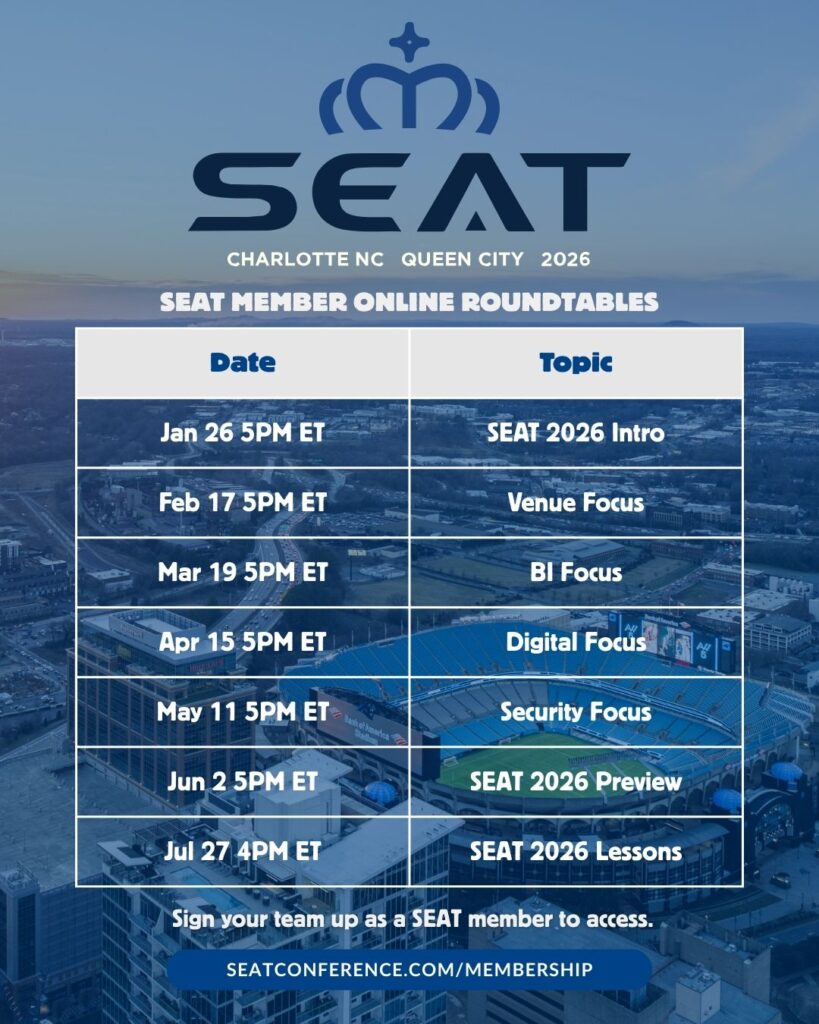
Join us for the May SEAT Member Roundtable with a focus on Venue & Security.
- Date: Monday, May 11
- Time: 5:00PM ET
- Topic: SEAT 2026 – Venue & Security- What is working? What projects are you working on?
- Who can attend: SEAT members, plus SEAT attendees from the past three years
See you at the roundtable and in Charlotte,
2026 SEAT Member Roundtable Schedule
We’ll email you a few days before so you can RSVP and get the meeting links.
Online Roundtables will be held for SEAT members (although we may offer invites to past attendees on occasion).
All Roundtables will be moderated by SEAT Steering Committee members.